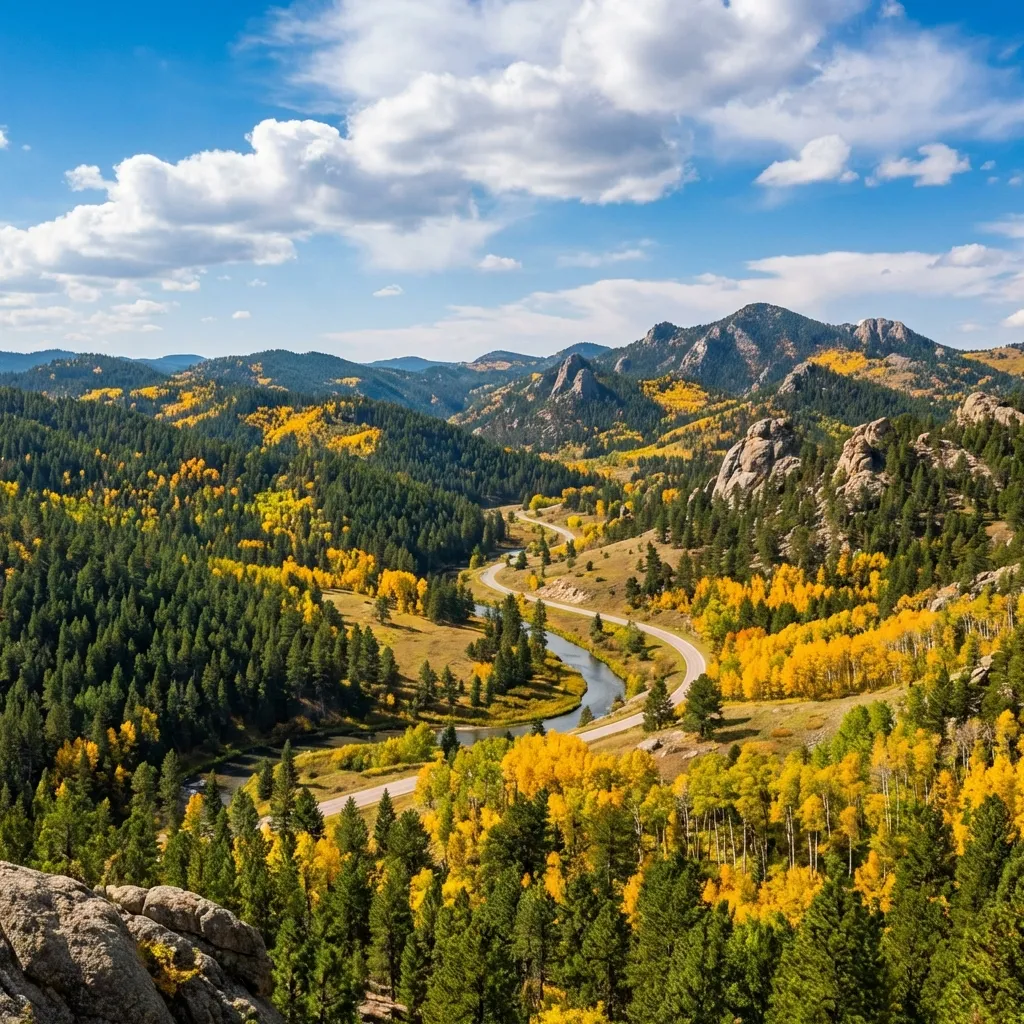
Black Hills Weather by Month
Average temperatures, rain, and snow for every month, plus what to pack and when the weather is best
Updated: July 26, 2026 | Stage 2 fire restrictions
The Black Hills of South Dakota have warm summers, cold snowy winters, and two genuinely mild shoulder seasons in between. July is the warmest month and January the coldest, but June and September deliver the most comfortable weather of the year. Below is the full month-by-month picture, based on Rapid City averages, with what to pack for each season.
Book a Tour for Your Black Hills Trip
Planning around the weather? Lock in the experiences before they sell out, top-rated tours with free cancellation through Viator.

Twilight Tour: Custer State Park & Mt Rushmore Lighting Ceremony
Experience the stunning beauty of the Black Hills on this unforgettable private afternoon & evening tour, designed to highlight the region’s most scenic drives & end with the Mt Rushmore Lighting Ceremony. First, we visit the tranquil Sylvan Lake, nestled among pine-covered hills & dramatic rock formations. We continue with a picturesque journey along the legendary Needles Hwy, where towering granite spires, narrow tunnels, & sweeping views create an unforgettable drive. You’ll have plenty of time for photo stops, short walks, and commentary from your knowledgeable local guide. Then, travel the engineering marvel of Iron Mt Rd, known for its pigtail bridges, scenic switchbacks, & tunnels that perfectly frame Mt Rushmore in the distance. We arrive at Mt Rushmore with time to explore, then as night falls, gather at the amphitheater for the Lighting Ceremony, a patriotic & heartfelt experience that includes a short film, tribute to veterans, & the illumination of the iconic carvings.

Western Horizons Hot Air Balloon rides
Western Horizons Hot Air Balloons offers breathtaking panoramic views of the beautiful Southern Black Hills of South Dakota. Our hot air balloon rides last approximately one hour. The entire experience from pre-flight set up to post-flight refreshments can last from 2 to 3 hours. We fly out of Hot Springs, SD, just after sunrise, weather permitting.

Mt Rushmore, Crazy Horse and Custer State Park Wildlife Loop Tour
What makes this tour unique is the combination of three of Western South Dakota's most iconic destinations, Mount Rushmore, Crazy Horse Memorial, and Custer State Park Wildlife Loop, into a single, comprehensive, and fully narrated experience. Over 8-9 hours, you'll not just see these landmarks, but gain a deeper understanding and appreciation for their history, cultural significance, and natural beauty. We always give the guest time to buy their lunch during the tour.

Bike Adventure on the Mickelson Trail - Private
See the Black Hills in a unique way. Enjoy the quiet, scenic trail and let our guides tell you on some of the history, culture and flora and fauna of the area! Great fun for any fitness level - we can accommodate all in your group, even if some want to ride and others don't. This tour is customizable. Questions? Contact us for more information.

Badlands National Park - Sunset and Stargazing (Private)
A once in a lifetime opportunity to visit the incredible Badlands; first in the afternoon and into a golden sunset - followed by the official National Park stargazing program. The best of both worlds, this tour allows us the view wildlife and the parks formations before the sun sets, and then taking on the park after dark! Because Badlands National Park is not surrounded by big cities or other major sources of light pollution, night skies in the park are very clear. After dark, visitors can see many of the night sky’s greatest hits: constellations, the moon, satellites, and airplanes. But the special darkness of Badlands National Park helps visitors to see even more like planets, the Milky Way, star clusters, nebulae, the International Space Station, shooting stars, and, very occasionally, the aurora borealis.

Private Tour of the Badlands with Local Experts
The Badlands have many secrets and requires a seasoned guide to explain and reveal them. GeoFunTrek Tours' guides are local experts with decades of experience. We have no seasonal-guides, part-time guides or trainee-guides. This is a family-owned business and all tours are conducted by family members: Cindy, Christopher and John Esposti. We have the knowledge and skills to make your day one to remember. You will always get the A-Team when you tour with GeoFunTrek Tours! All tours are PRIVATE TOURS, exclusive to the group booking the tour, and no additional guests will be included. Children must be accompanied by one adult. Children 3 years and younger are free and will have their own seat. Children's car seats must be supplied by family members when required. Our vehicles are SUV's and a van may be rented for larger groups. Please enquire about vehicles if you have any questions. This tour is great for 3-generation families with Children, multiple couples and groups of friends.
Prices and availability provided by Viator. We earn a commission on bookings, at no extra cost to you.
What is the Weather Like in the Black Hills?
The Black Hills have warm summers, with highs in the 80s in July, and cold, snowy winters. June and September are the most comfortable months to visit, with highs in the 60s and 70s and cool, pleasant evenings. Rapid City is the baseline for the numbers below, but the Black Hills interior and Mount Rushmore sit at higher elevation and run several degrees cooler.
Best Weather
June and September (60s-70s)
Warmest
July (avg high 85 degrees)
Coldest
January (avg low 11 degrees)
“July and August are the warmest months of the year, when daytime temperatures climb into the 70s and 80s.”
Black Hills Weather by Month
These averages are based on Rapid City conditions. Temperatures run several degrees cooler at higher elevations like Mount Rushmore, Custer State Park, and Black Elk Peak. Precipitation totals include both rain and the water content of snow.
| Month | Avg High (°F) | Avg Low (°F) | Precipitation | Notes |
|---|---|---|---|---|
| January | 34° | 11° | 0.4" | Coldest month, dry and snowy |
| February | 38° | 15° | 0.5" | Cold, still firmly winter |
| March | 46° | 22° | 1" | Snowiest transition month |
| April | 58° | 32° | 2" | Mild spring, variable weather |
| May | 67° | 42° | 3" | Greenest, wettest stretch begins |
| June | 77° | 52° | 3.3" | Warm days, afternoon thunderstorms begin |
| July | 85° | 58° | 2" | Warmest month, afternoon storms |
| August | 83° | 56° | 1.8" | Sturgis Rally heat, Aug 7-16, 2026 |
| September | 74° | 46° | 1.3" | Ideal, mild and comfortable |
| October | 63° | 35° | 1" | Crisp fall color |
| November | 47° | 23° | 0.5" | Cooling fast, off-season begins |
| December | 36° | 13° | 0.4" | Cold, dry, snowy scenery |
Elevation note: the Black Hills interior and Mount Rushmore, at 5,725 feet, run several degrees cooler than these Rapid City figures. Black Elk Peak, the high point at 7,244 feet, is cooler still.
Key event: the 86th Sturgis Motorcycle Rally runs August 7-16, 2026, during the region's warm, dry late-summer stretch.
Summer Weather & Afternoon Thunderstorms (June-August)
Black Hills summers are warm rather than hot. July highs average around 85 degrees in Rapid City, with August close behind in the low 80s, and nights cool off comfortably into the 50s. At elevation, Mount Rushmore and the interior run several degrees cooler, which makes midday hiking far more pleasant than the Rapid City numbers suggest.
The defining feature of summer weather here is the afternoon thunderstorm. Mornings often start clear or foggy, the fog burns off to sun, heat builds through the day, and storms fire up in the afternoon and evening. They are usually brief, but they can turn severe, with heavy downpours, gusty winds, and hail. A local weather account noted severe storms and "big time heat" across the region in early July 2026, a good reminder that summer afternoons can shift quickly.
Watch For
- • Afternoon and evening thunderstorms, June through August
- • Brief but sometimes severe storms with hail
- • Occasional extreme heat spikes near 100 degrees
- • Stage 2 fire restrictions on Black Hills National Forest (from July 27, 2026): no campfires or charcoal grills on forest land through Dec. 27 unless lifted
Plan Around It
- • Start hikes early and be off exposed ridges by early afternoon
- • Keep a rain layer handy even on clear mornings
- • Save caves for hot afternoons, a constant 53 degrees inside
Winter Weather & Snow (November-March)
Black Hills winters are cold and snowy, but more variable than most people expect. From November through March, highs typically run in the 30s and 40s and lows dip into the teens, with March often the snowiest transition month as spring storms roll through. Higher elevations in the interior collect noticeably more snow than lower-lying Rapid City.
The variability comes from the Chinook, a warm downslope wind that can send temperatures climbing 30 or 40 degrees in a matter of hours and melt snow off south-facing slopes. The flip side is black ice on shaded and north-facing stretches of road, which can stay frozen long after the sun is out. Winter driving here rewards caution, good tires, and a check of the forecast before mountain routes.
The upside: winter brings the fewest crowds of the year and a striking snow-covered landscape. Cave tours at Wind Cave and Jewel Cave stay a comfortable 53 degrees year-round, which makes them a reliable cold-weather option.
What to Pack by Season
Mountain weather moves fast here, so layers matter in every season. Use this as a quick packing checklist.
Spring (March-May)
- • Warm layers plus a lighter mid-layer for mild afternoons
- • Rain jacket for spring showers
- • Waterproof shoes for lingering snow and mud
- • Hat and gloves for cold mornings
Summer (June-August)
- • Light clothing for warm days in the 80s
- • Sun protection: hat, sunglasses, sunscreen
- • Packable rain shell for afternoon thunderstorms
- • A light layer for cool evenings in the 50s
Fall (September-November)
- • Layers for warm days and crisp mornings
- • Sweater and a light to medium jacket
- • Long pants and comfortable hiking shoes
- • A warmer layer for late-fall cold snaps
Winter (December-February)
- • Heavy insulated coat and thermal base layers
- • Gloves, warm hat, and a scarf
- • Waterproof, insulated boots for snow and ice
- • Traction aids if you plan to walk icy trails
Best Time to Visit for Good Weather
If your priority is comfortable weather, aim for June or September. June brings warm days in the upper 70s, long daylight hours, and the greenest landscapes of the year, with the trade-off of building afternoon thunderstorms. September is the mild counterpart, with highs in the 70s, cool evenings, low humidity, and the season's thinnest crowds once the summer rush winds down.
July and August are the warmest and most popular, ideal if you want full access to every attraction and do not mind the heat or the crowds. Spring and late fall are cooler and more variable, better suited to travelers chasing low prices and quiet trails than guaranteed sunshine. For a fuller breakdown of crowds, prices, and events alongside the weather, see our best time to visit the Black Hills guide, and if Mount Rushmore is the focus, our worst time to visit Mount Rushmore guide covers the dates and hours to plan around.
Weather also shapes where you go. Fair-weather months are ideal for the wildlife drives and open valleys of Custer State Park and the trails covered in our guide to the best hikes in the Black Hills.
Frequently Asked Questions
What is the weather like in the Black Hills?
The Black Hills have warm summers and cold, snowy winters. July is the warmest month, with average highs in the mid-80s in Rapid City, while January is the coldest, with highs in the mid-30s and lows near 11 degrees. June and September are the most comfortable months, with highs in the 70s and cool evenings. The Black Hills interior and Mount Rushmore sit at higher elevation and run several degrees cooler than the Rapid City numbers.
What is the rainiest month in the Black Hills?
Late spring and early summer, roughly May and June, are the wettest months in the Black Hills. Rapid City averages about 3 inches of precipitation in May and 3.3 inches in June, much of it from afternoon and evening thunderstorms. The winter months are the driest, with only about half an inch of precipitation per month.
Does it snow in the Black Hills?
Yes. It snows in the Black Hills from roughly November through March, with March often the snowiest transition month. Higher elevations in the interior, including Mount Rushmore and Black Elk Peak, get more snow than lower-elevation Rapid City. Snow is possible in early spring and late fall as well.
How hot does it get in the Black Hills in summer?
In summer, July highs average in the mid-80s in Rapid City, with August close behind in the low 80s. It is cooler at elevation, so Mount Rushmore and the Black Hills interior run several degrees below those numbers. Summer nights are comfortable, dropping into the 50s, and brief afternoon thunderstorms are common.